
How to Get Comfortable When Your Lower Back Hurts
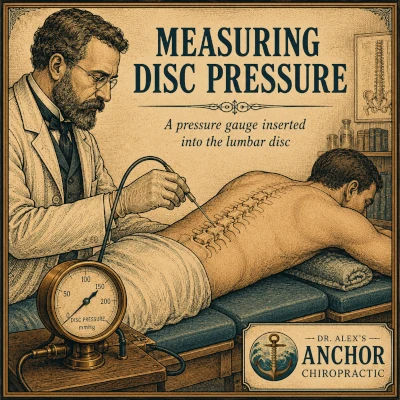
A scientist actually stuck a needle into the disc between the fourth and fifth lumbar vertebrae.
The needle contained a small pressure gauge. The researchers then had the subject stand, sit, bend forward and lie in different positions while they recorded the pressure inside the disc.
The position you put your body in changes the pressure on your low back.
Yeah. No duh.
Most of us already know that because we can feel it.
But the science did something interesting.
It put numbers to it.
When your low back hurts, finding a position that takes the pressure off—even just a little bit—is going to be very, very welcome.
It can help you relax, get comfortable, let things settle down and get some rest.
When you’re hurt, that’s a big deal.
So, let’s have a look at the numbers.
Watch: How Position Changes Pressure on Your Low Back
I recorded this explanation years ago, but the practical lesson has not changed.
Position Changes Pressure
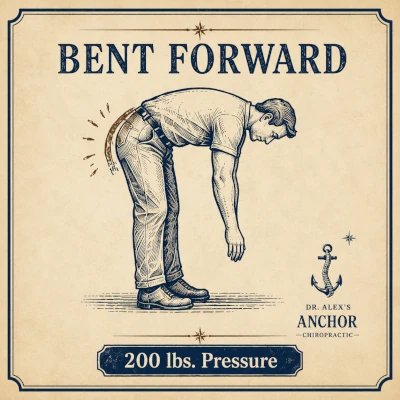
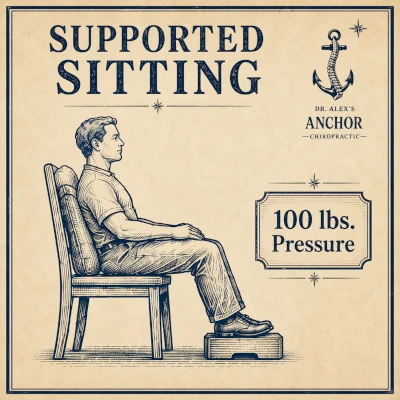
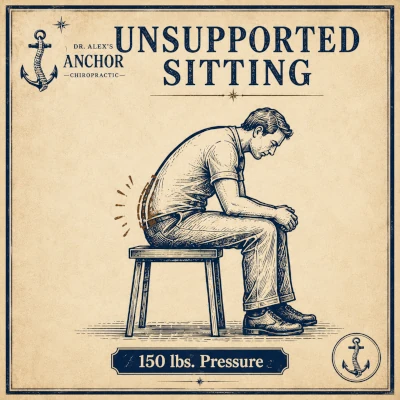
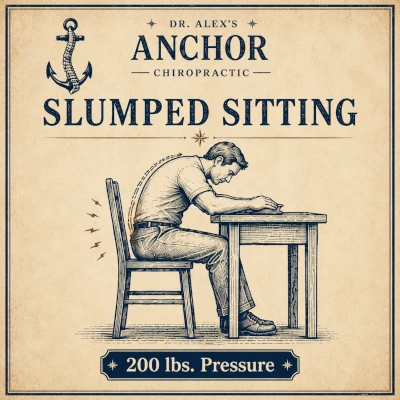
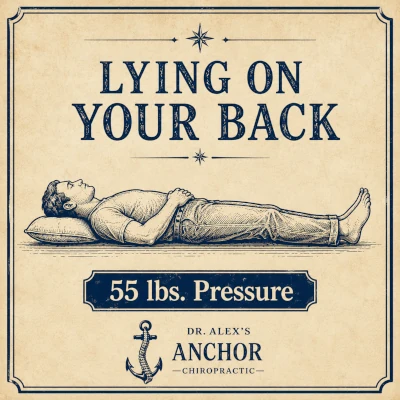
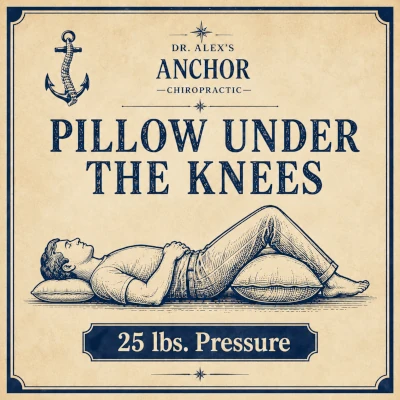
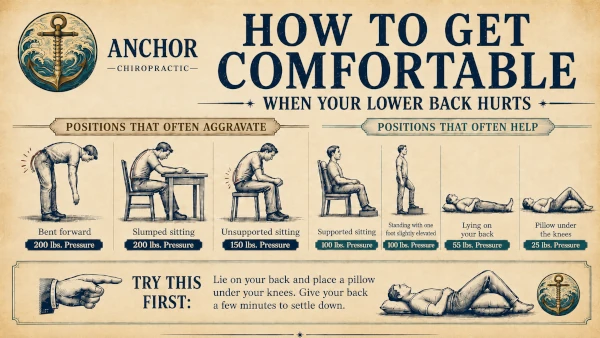
Bending forward and slumped sitting place some of the greatest pressure on the lower back.
Sitting with your back supported reduces it.
Lying down reduces it even more.
The point is not complicated.
When your back is acting up, stop putting yourself in the positions that keep aggravating it. Find a position that lets the pressure come down and gives you a chance to get comfortable and rest.
Why Old Bars Have a Foot Rail
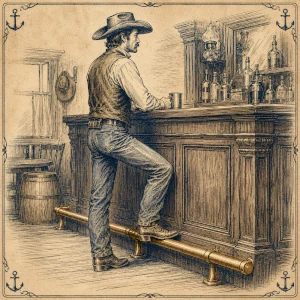
You have probably seen the brass or wooden rail running along the bottom of an old-fashioned bar.
That rail is not only there for decoration.
It gives you a place to put one foot.
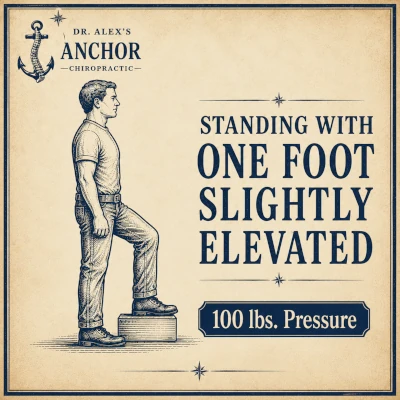
Standing with one foot slightly elevated changes your stance and can make standing more comfortable. The old bar owners understood that comfortable customers stayed longer.
And customers who stayed longer bought more drinks.
Good for the customer.
Good for business.
You can use the same idea if you have to remain standing for extended periods. Place one foot on a low stool, cabinet ledge or small box while standing at the kitchen counter, workbench or sink. Switch feet as needed.
The Position I Want You to Remember
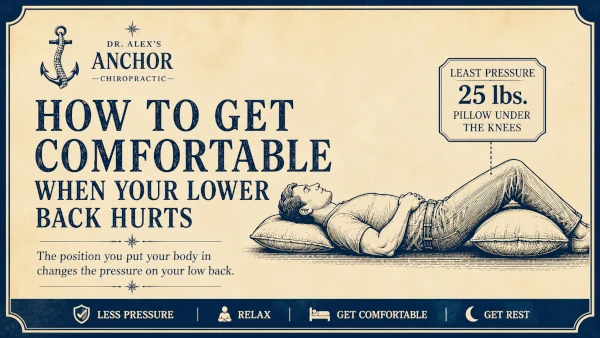
The position showing the least pressure on the chart is lying on your back with a pillow underneath your knees.
That is also very close to the position created by a La-Z-Boy recliner or a zero-gravity lounge chair.
Your back is supported.
Your hips and knees are bent.
The weight of your legs is supported instead of pulling on your lower back.
I learned the value of that position the hard way.
When I was in chiropractic school, I suffered through some of the worst back pain of my life. I had sciatica, and there were nights when lying in bed was miserable.
I would spend the night in a La-Z-Boy chair.
I could be in excruciating pain, sit down in that chair, lean back and finally get enough pressure off my back to rest.
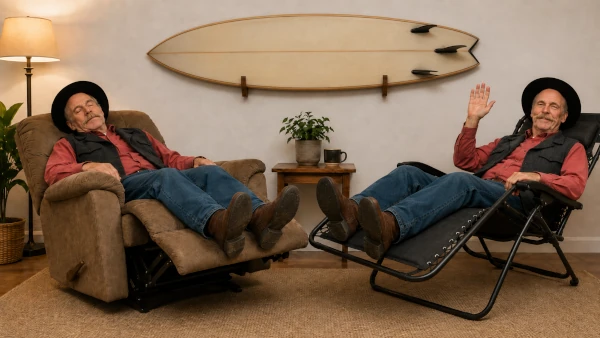
It did not fix my back.
But when you are hurting that badly, being able to get comfortable and sleep is a blessing.
That is why I want people to know about this position.
Lie on your back and place one or two firm pillows underneath your knees. Let the pillows support the weight of your legs. Then give your back a few minutes to settle down…. and get some rest.
References
Nachemson A, Morris JM. In Vivo Measurements of Intradiscal Pressure: Discometry, a Method for the Determination of Pressure in the Lower Lumbar Discs. Journal of Bone and Joint Surgery. 1964;46:1077–1092.
Nachemson AL. Disc Pressure Measurements. Spine. 1981;6(1):93–97.
Wilke HJ, Neef P, Caimi M, Hoogland T, Claes LE. New In Vivo Measurements of Pressures in the Intervertebral Disc in Daily Life. Spine. 1999;24(8):755–762.
Dutro S, Wheeler L. Pregnancy and Exercise. In: White AH, Anderson R, editors. Conservative Management of Low Back Pain. Baltimore: Williams & Wilkins; 1991.